Berlin, 02 July 2026 – After nearly six years of leading INBRIGHT, co-founder and Managing Partner Torsten Schmidt will hand over operational management of the company to Kateryna Bal, effective 1 July 2026. The leadership transition forms part of a planned succession process at the Berlin-based light industrial investor, developer, and asset manager. In his continued role as shareholder, Torsten Schmidt will remain involved in INBRIGHT in a strategic capacity, focusing on long-term corporate development, partnerships, and investor relations. Johannes Nöldeke and Sebastian Pijnenburg will remain members of the management team without changes and will continue to oversee their respective areas of responsibility as before.
Kateryna Bal, who takes over leadership of INBRIGHT, has played a key role in shaping the company’s growth trajectory from the very beginning. She joined INBRIGHT in 2021 as Head of Operations. As Managing Director of INBRIGHT Development GmbH, she will now be responsible for portfolio management as well as key commercial and administrative functions of the company. These include Office & Administration, Accounting, Controlling, Structuring, Human Resources, and investor relations with equity partners.
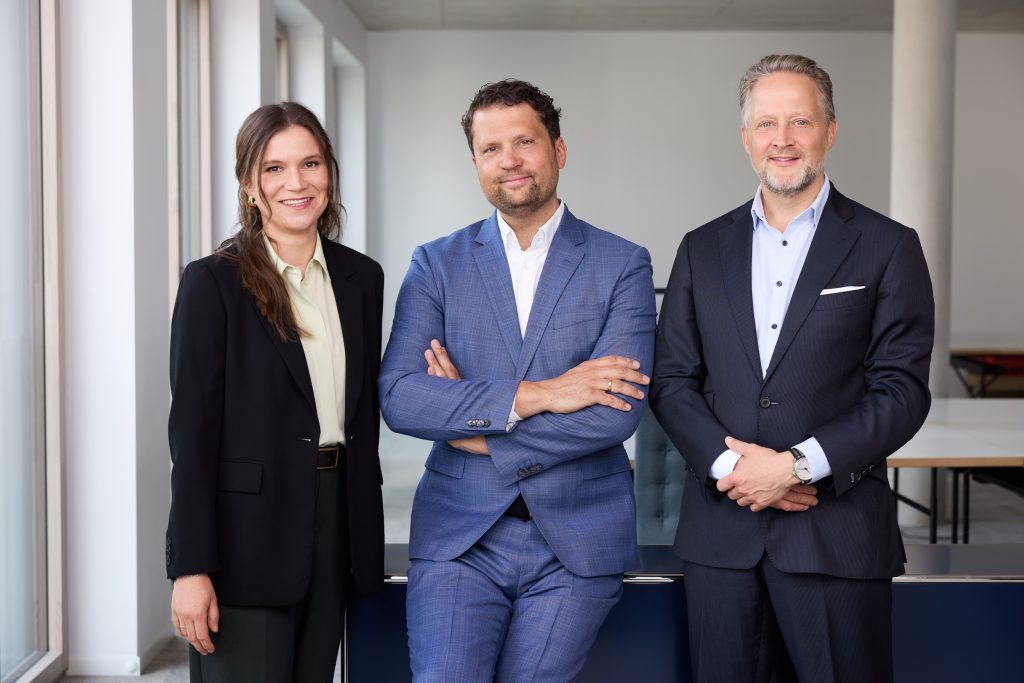
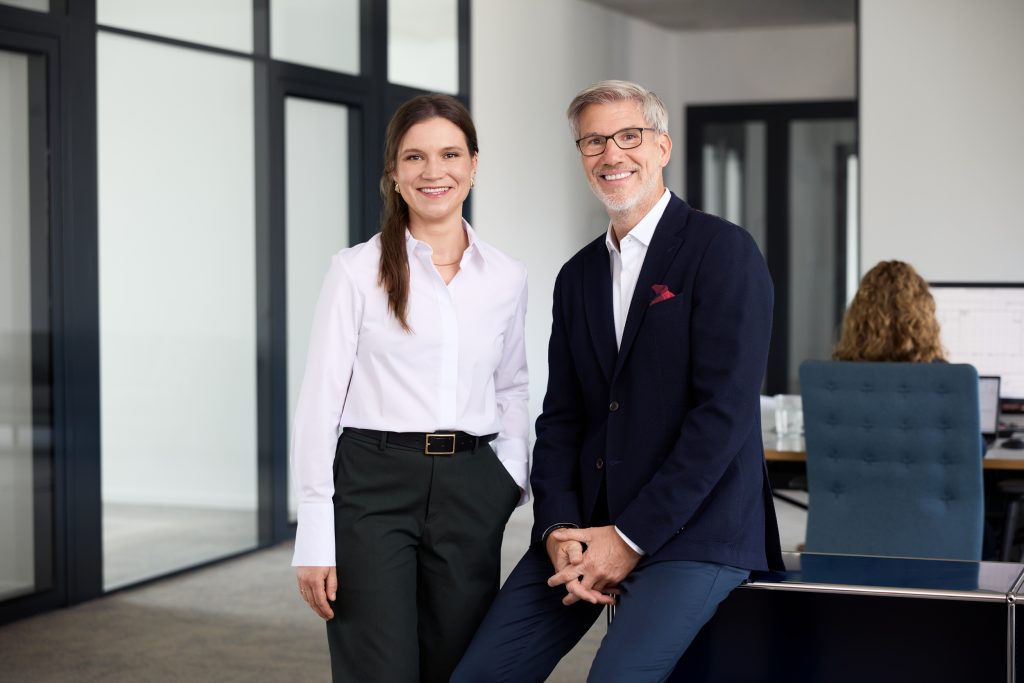
Image credit: Simon Wegener Fotografie
Prior to joining INBRIGHT, Kateryna Bal spent more than eight years in portfolio management and corporate development at BEOS AG. As an authorised signatory (Prokuristin) at a management company, she also oversaw complex real estate portfolios. She studied architecture at HAWK University of Applied Sciences and Arts in Hildesheim and at TU Berlin. Since April 2025, she has been part of INBRIGHT’s extended executive leadership team with signing authority and additional responsibilities in corporate governance.
Since its founding in 2020, INBRIGHT has developed into one of the most active developers and asset managers of light industrial and last-mile logistics real estate. Together with partners such as Patron Capital and Convalor, the company has initiated projects with a total investment volume of more than EUR 500 million and approximately 310,000 square metres of lettable space across Germany and Portugal in recent years.
Among its flagship projects is the Ludwigsburg Industriezentrum (LIZ), one of the largest privately financed industrial and transformation projects in southern Germany. At the same time, INBRIGHT has expanded into Portugal, where it is further building out its organisational structure under the leadership of Christoph Gumlich.
Kateryna Bal, Managing Director of INBRIGHT Development GmbH, commented: “INBRIGHT has developed very dynamically in recent years. For the next phase of growth, we aim to integrate operational processes more closely and further scale our development and management platform. The key for us is to continue this momentum with clear structures, short decision-making paths, and close collaboration within a strong team. I am very much looking forward to shaping INBRIGHT’s future together with my colleagues.”
Torsten Schmidt has played a decisive role in shaping INBRIGHT since its founding and has built the company together with co-managing directors Johannes Nöldeke and Sebastian Pijnenburg, as well as a current team of 30 employees. Under his leadership, INBRIGHT has evolved from a Berlin-based start-up into an internationally active real estate company with operations in Germany and Portugal and a strong institutional investor and partner network.
Torsten Schmidt said: “Kateryna Bal is the ideal appointment as Managing Director of INBRIGHT. She combines strategic thinking with strong operational excellence and has known the company, our projects, and our partners since the early days. Together, we have laid the foundation for INBRIGHT’s current position. I am very much looking forward to supporting the company’s continued development from a strategic perspective.”
With this leadership transition, INBRIGHT continues to emphasise continuity and thoughtful growth, shaped by long-term thinking, responsible management, and a corporate culture that places people at its centre. The company remains focused on sustainable light industrial and last-mile logistics real estate in economically strong regions, the transformation of existing assets, and the execution of institutional investment strategies across Germany and Europe.
About INBRIGHT
INBRIGHT develops light industrial and logistics properties in economically strong locations with excellent transport connections. Since its founding in 2020, the company has initiated projects with a total investment volume of over €520 million and approximately 310,000 square meters of rental space in Germany. With the establishment of INBRIGHT Portugal, the company has also become active in the Portuguese market. Today, INBRIGHT employs 30 team members, all dedicated to implementing sustainable and innovative real estate solutions.
www.inbright.de
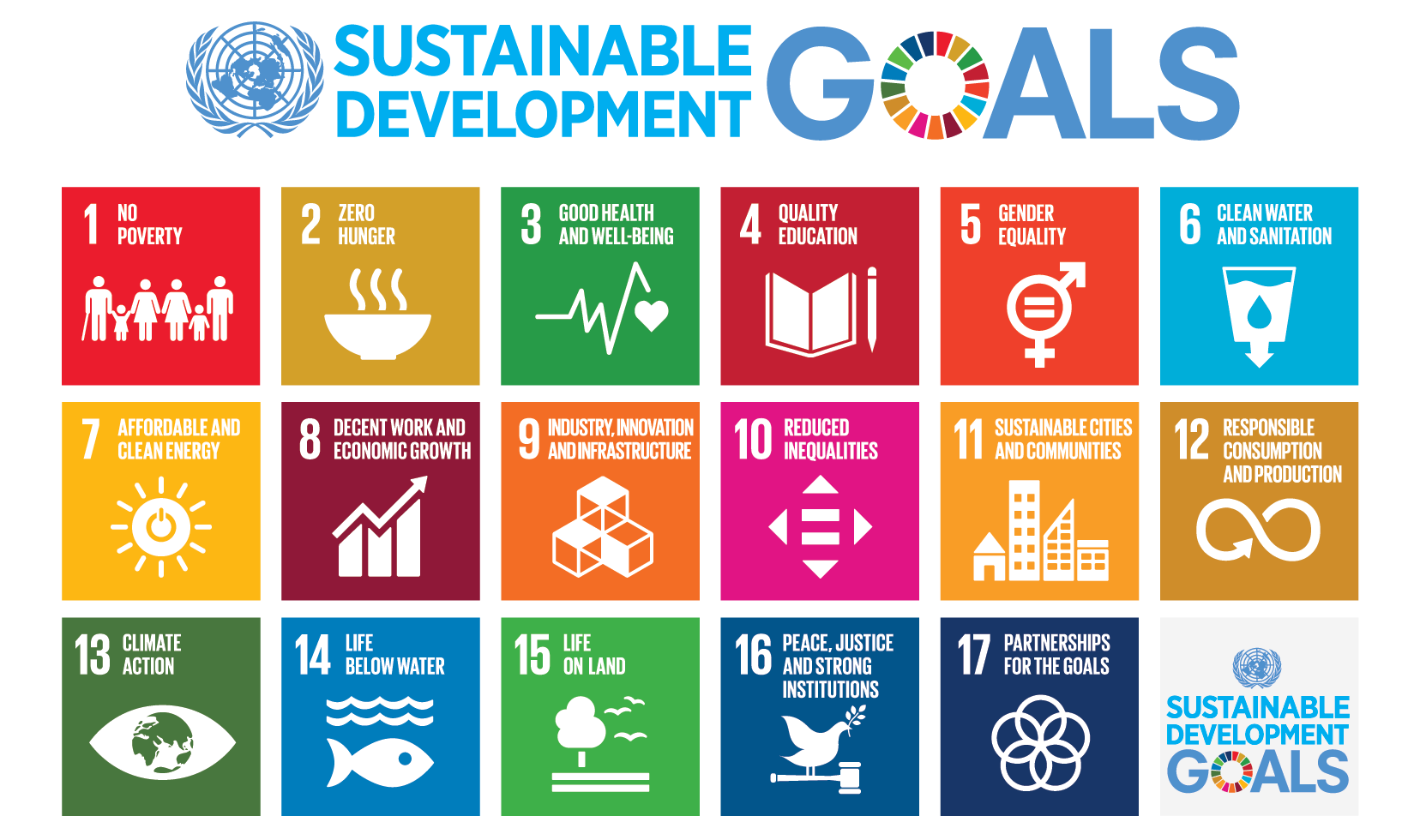
The 17 Sustainable Development Goals (SDGs) were adopted in 2015 by the member states of the United Nations.
They set a road map for the sustainable social, economic and environmental transformation of our world by 2030.
The SDGs also offer us as a company a framework for contributing to a positive future for the world. Our ESG strategy is our contribution to tackling the greatest worldwide challenges, especially to achieving the following SDGs:
We respect diversity, a fair pay and participation structure and the indivdual promotion of out team members, thus contributing to equality of opportunity.
Economic success and a profitable investment strategy are for us the foundation for securing attractive jobs in the long term and contributing to healthy economic growth.
We promote a low-emission infrastructure by locating our properties close to existing residential areas, offering our tenants access to public transport. We modernise and reposition old industrial and commercial properties to make their use lower in emissions, cleaner and more flexible, thus making a noticeable contribution to sustainable industry.
When building and repairing our properties, we are careful to use innovative and engery-efficient systems so as to aviod unnecessary environmental pressures on the surrounding area. Wherever compatible with legislation and the comfort demands of our users, we reduce technical equipment to a minimum to promote the longevity of our properties.
We align both our company and our property projects to ESG criteria. This includes planning our properties in a way that is sparing of resources and ensures them a long useful life with maximum flexibility. We also maintain open interactions in the spirit of partnership with all those involved – from planners and building firms through to the eventual user.
Reducing emissions, especially CO2 emissions, has a high priority for us within our ESG strategy. We as a company aim to reduce and compensate for our CO2 footprint to make the most effective contribution we can to protecting the climate.
In an initial workshop, we first developed core values for our company. The development of an ESG strategy for INBRIGHT is based on this: main topics were determined and validated based on a fixed evaluation scheme in a two-day workshop. On the one hand, the topics result from the requirements of national and international industry standards and frameworks, such as DGNB, LEED and GRESB, and, on the other hand, from general sustainability standards, such as the Global Reporting Initiative (GRI), the Sustainability Accounting Standards Board (SASB) and the Sustainable Development Goals. The list of topics was ultimately supplemented by specific industry requirements from the Light Industrial area. The collection of topics was classified based on a fixed evaluation scheme in a materiality assessment using a two-dimensional matrix with the dimensions “Relevance to business” and “Effects on the government and society”. The topics with the highest values in both dimensions, and hence being above the materiality threshold, form the basis of our ESG strategy or our sustainability programme. The materiality assessment is revalidated annually with the participation of internal and external stakeholders and the assessment of the topics is adjusted accordingly.
The 17 Sustainable Development Goals (SDGs) were adopted in 2015 by the member states of the United Nations.
They set a road map for the sustainable social, economic and environmental transformation of our world by 2030.
The SDGs also offer us as a company a framework for contributing to a positive future for the world. Our ESG strategy is our contribution to tackling the greatest worldwide challenges, especially to achieving the following SDGs:
We respect diversity, a fair pay and participation structure and the indivdual promotion of out team members, thus contributing to equality of opportunity.
Economic success and a profitable investment strategy are for us the foundation for securing attractive jobs in the long term and contributing to healthy economic growth.
We promote a low-emission infrastructure by locating our properties close to existing residential areas, offering our tenants access to public transport. We modernise and reposition old industrial and commercial properties to make their use lower in emissions, cleaner and more flexible, thus making a noticeable contribution to sustainable industry.
When building and repairing our properties, we are careful to use innovative and engery-efficient systems so as to aviod unnecessary environmental pressures on the surrounding area. Wherever compatible with legislation and the comfort demands of our users, we reduce technical equipment to a minimum to promote the longevity of our properties.
We align both our company and our property projects to ESG criteria. This includes planning our properties in a way that is sparing of resources and ensures them a long useful life with maximum flexibility. We also maintain open interactions in the spirit of partnership with all those involved – from planners and building firms through to the eventual user.
Reducing emissions, especially CO2 emissions, has a high priority for us within our ESG strategy. We as a company aim to reduce and compensate for our CO2 footprint to make the most effective contribution we can to protecting the climate.