13.10.2026

INBRIGHT and Convalor Lease 7,300 sqm to Parcel Carrier Legno-Trans in Stuttgart-Bad Cannstatt

Berlin/Stuttgart, 13 October 2026. INBRIGHT and Convalor Projektpartner, in collaboration with Benguela Ventures, have leased approximately 7,300 square metres at Neckartalstraße 153/155 in Stuttgart-Bad Cannstatt to parcel carrier Legno-Trans. The space comprises approximately 6,700 square metres of warehouse space and 600 square metres of office space. Legno-Trans will use the site to handle its parcel logistics operations, particularly last-mile delivery.

The property is located in Stuttgart’s Bad Cannstatt district. A light rail and bus stop can be reached in approximately two minutes on foot. Stuttgart Central Station is around 13 minutes away by light rail, with no changes required. The B14 highway is approximately a three-minute drive away.
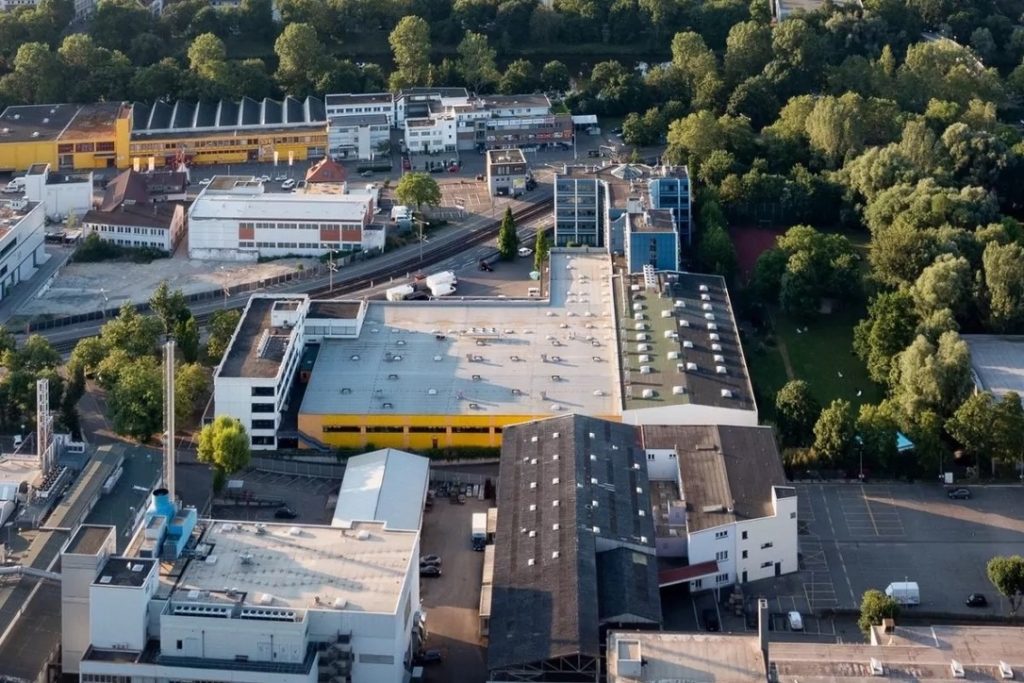
Image material: INBRIGHT, Photographer: Simon Wegener Fotografie

The space leased to Legno-Trans comprises approximately 6,700 square metres of warehouse space and 600 square metres of office space. It forms part of a commercial site spanning just under 16,000 square metres in total, comprising two office buildings and one warehouse building. The warehouse space is suitable for both logistics and manufacturing operations.

In less than two months, the space was adapted and fitted out to meet Legno-Trans’s specific requirements. Benguela Ventures managed the project, with SFP-Architekten responsible for overall planning. IGH Stuttgart and the Sowa planning office also contributed to the implementation. WFC-Immobilien advised on the lease.

From Pharmaceutical Facility to Commercial Park
INBRIGHT acquired the property from Alliance Healthcare in 2023 together with Convalor. At the time of acquisition, the site was occupied by a single pharmaceutical tenant. Since then, INBRIGHT has been redeveloping the site into a modern multi-tenant commercial park offering flexible spaces that can be adapted to a variety of uses.

In addition to the space leased to Legno-Trans, INBRIGHT is currently modernising further areas of the site. Approximately 2,600 square metres of storage, studio and workshop space, as well as around 5,400 square metres of office space, are being redeveloped for flexible commercial use. The aim is to create spaces with a high degree of adaptability for future occupiers, allowing them to respond to changing requirements. Completion is scheduled for 2027.

The site’s technical infrastructure and energy systems are also being upgraded to meet current standards. Planned improvements include a photovoltaic system with a capacity of approximately 270 kilowatt-peak (kWp) and the replacement of the heating system.

Johannes Nöldeke, Managing Director of INBRIGHT Development GmbH, says: “We redevelop existing properties to ensure they remain flexible in the long term and do not need to be reconsidered again ten years from now. For us, this means transforming buildings in technical, functional and energy-related terms so that they can be adapted quickly and at any time to changing occupier requirements. The lease to Legno-Trans is a concrete example of this approach.”

Michail Thunert of Benguela Ventures says: “In less than two months, we adapted the space precisely to meet Legno-Trans’s operational requirements. Close coordination between the occupier, the planning team and the implementation partners was key to achieving this. In a short period of time, an existing property was transformed into a modern logistics facility that a financially sound parcel delivery company can use over the long term.”

Your media contact

Yvonne Hoberg
GLOWING MIND | Communications & Transformation

M +49 151 54 750 169
presse@inbright.de

Our Contribution to the sustainable Development Goals of the United Nations

The 17 Sustainable Development Goals (SDGs) were adopted in 2015 by the member states of the United Nations.
They set a road map for the sustainable social, economic and environmental transformation of our world by 2030.

The SDGs also offer us as a company a framework for contributing to a positive future for the world. Our ESG strategy is our contribution to tackling the greatest worldwide challenges, especially to achieving the following SDGs:

We respect diversity, a fair pay and participation structure and the indivdual promotion of out team members, thus contributing to equality of opportunity.

Economic success and a profitable investment strategy are for us the foundation for securing attractive jobs in the long term and contributing to healthy economic growth.

We promote a low-emission infrastructure by locating our properties close to existing residential areas, offering our tenants access to public transport. We modernise and reposition old industrial and commercial properties to make their use lower in emissions, cleaner and more flexible, thus making a noticeable contribution to sustainable industry.

When building and repairing our properties, we are careful to use innovative and engery-efficient systems so as to aviod unnecessary environmental pressures on the surrounding area. Wherever compatible with legislation and the comfort demands of our users, we reduce technical equipment to a minimum to promote the longevity of our properties.

We align both our company and our property projects to ESG criteria. This includes planning our properties in a way that is sparing of resources and ensures them a long useful life with maximum flexibility. We also maintain open interactions in the spirit of partnership with all those involved – from planners and building firms through to the eventual user.

Reducing emissions, especially CO2 emissions, has a high priority for us within our ESG strategy. We as a company aim to reduce and compensate for our CO2 footprint to make the most effective contribution we can to protecting the climate.

How we derived Our ESG strategy

In an initial workshop, we first developed core values for our company. The development of an ESG strategy for INBRIGHT is based on this: main topics were determined and validated based on a fixed evaluation scheme in a two-day workshop. On the one hand, the topics result from the requirements of national and international industry standards and frameworks, such as DGNB, LEED and GRESB, and, on the other hand, from general sustainability standards, such as the Global Reporting Initiative (GRI), the Sustainability Accounting Standards Board (SASB) and the Sustainable Development Goals. The list of topics was ultimately supplemented by specific industry requirements from the Light Industrial area. The collection of topics was classified based on a fixed evaluation scheme in a materiality assessment using a two-dimensional matrix with the dimensions “Relevance to business” and “Effects on the government and society”. The topics with the highest values in both dimensions, and hence being above the materiality threshold, form the basis of our ESG strategy or our sustainability programme. The materiality assessment is revalidated annually with the participation of internal and external stakeholders and the assessment of the topics is adjusted accordingly. 

Our Contribution to the sustainable Development Goals of the United Nations

The 17 Sustainable Development Goals (SDGs) were adopted in 2015 by the member states of the United Nations.
They set a road map for the sustainable social, economic and environmental transformation of our world by 2030.

The SDGs also offer us as a company a framework for contributing to a positive future for the world. Our ESG strategy is our contribution to tackling the greatest worldwide challenges, especially to achieving the following SDGs:

We respect diversity, a fair pay and participation structure and the indivdual promotion of out team members, thus contributing to equality of opportunity.

Economic success and a profitable investment strategy are for us the foundation for securing attractive jobs in the long term and contributing to healthy economic growth.

We promote a low-emission infrastructure by locating our properties close to existing residential areas, offering our tenants access to public transport. We modernise and reposition old industrial and commercial properties to make their use lower in emissions, cleaner and more flexible, thus making a noticeable contribution to sustainable industry.

When building and repairing our properties, we are careful to use innovative and engery-efficient systems so as to aviod unnecessary environmental pressures on the surrounding area. Wherever compatible with legislation and the comfort demands of our users, we reduce technical equipment to a minimum to promote the longevity of our properties.

We align both our company and our property projects to ESG criteria. This includes planning our properties in a way that is sparing of resources and ensures them a long useful life with maximum flexibility. We also maintain open interactions in the spirit of partnership with all those involved – from planners and building firms through to the eventual user.

Reducing emissions, especially CO2 emissions, has a high priority for us within our ESG strategy. We as a company aim to reduce and compensate for our CO2 footprint to make the most effective contribution we can to protecting the climate.