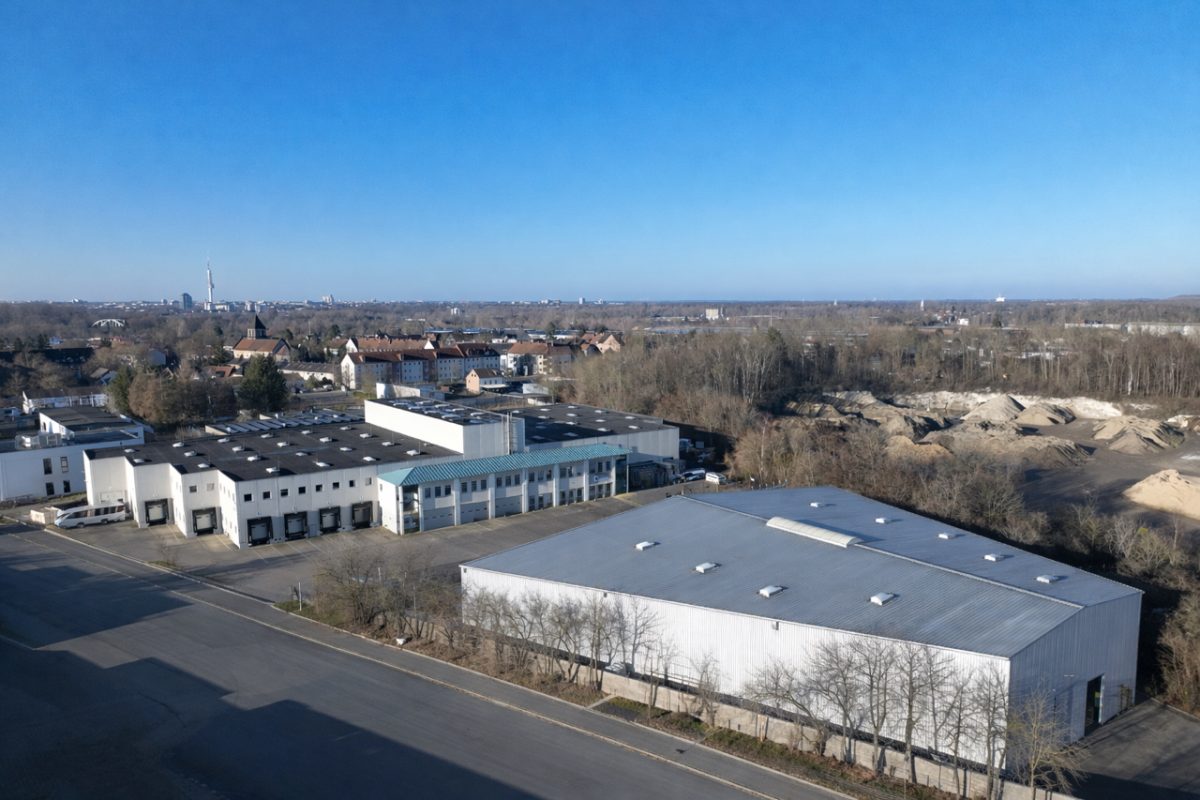
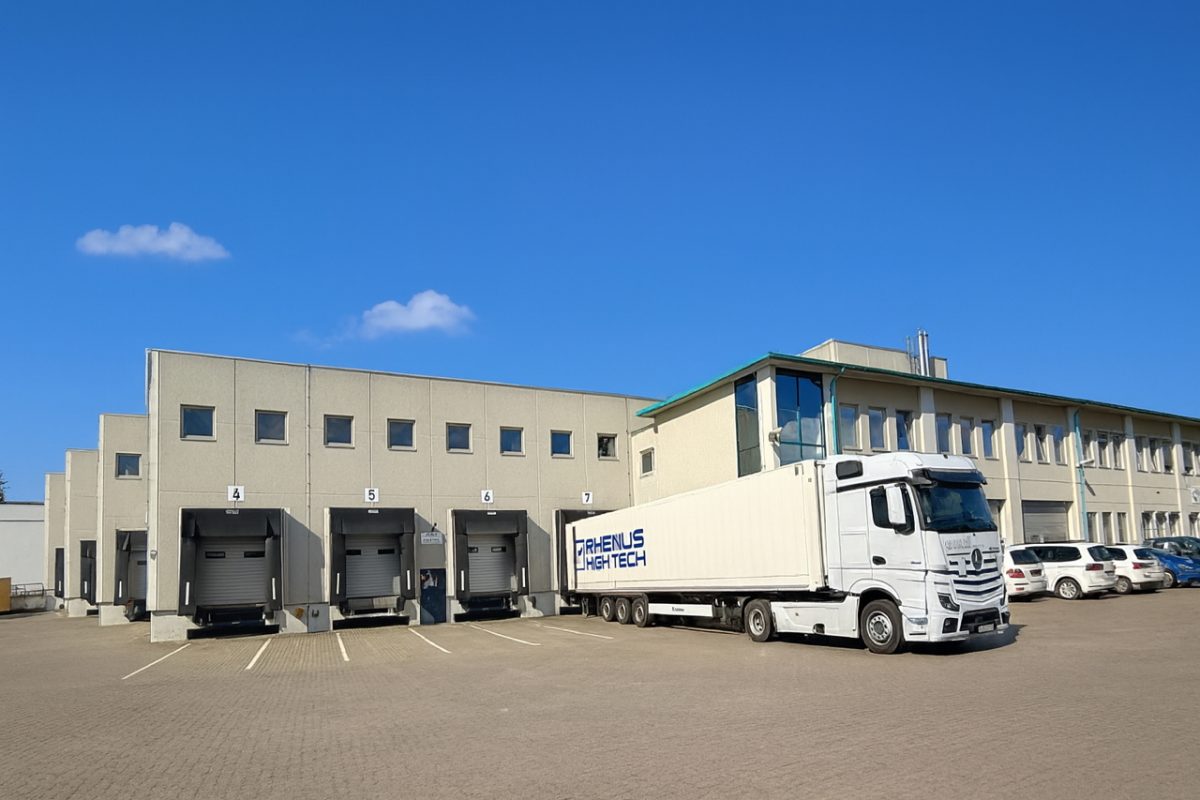
Located in the established Misburg-Anderten industrial area, this light industrial and logistics property is being systematically repositioned with a clear focus on ESG principles and the evolving requirements of modern occupiers.
Through targeted refurbishment of the existing buildings, energy efficiency, space flexibility and third-party usability are sustainably enhanced. The result is future-ready commercial space designed for logistics, distribution, production and service companies that value high-quality locations and long-term viability.
1994 / 2005
approx. 17.300 qm
approx. 10.400 qm
Zu den Mergelbrüchen 5+7, Hannover
8.00 m
8


The property is situated in the well-established Misburg-Anderten industrial area, one of Hanover’s key logistics and industrial hubs.
The asset comprises two buildings constructed in 1994 and 2005 and is currently leased to companies operating in logistics and distribution.
Following its acquisition by Patron Capital and INBRIGHT, the property has entered its next development phase. The ESG-aligned modernisation strategy is clearly focused on enhancing occupier value.
Targeted technical, energy-related and structural upgrades create modern, flexible light industrial and logistics space. The measures aim to improve energy efficiency, sustainability and operational performance while optimising building systems and energy supply.
The Hanover project represents a consistently ESG-driven modernisation approach combined with close collaboration with occupiers.
Planned ESG upgrades include the replacement of the heating system, installation of a rooftop photovoltaic system and the conversion of interior and exterior lighting to energy-efficient LED technology, partly complemented by motion sensors within the warehouse areas. In addition, the installation of EV charging infrastructure is currently under review. Further technical and structural measures contribute to enhancing overall energy efficiency.
Ongoing CRREM analyses ensure alignment with the 1.5-degree pathway and position the asset as “Paris-ready.” A BREEAM pre-assessment prepares the property for certification at a minimum level of “Good.”
INBRIGHT Development GmbH
Erasmusstraße 14
10553 Berlin
Phone: +49 30 403 686 2-0
Email: kr@inbright.de

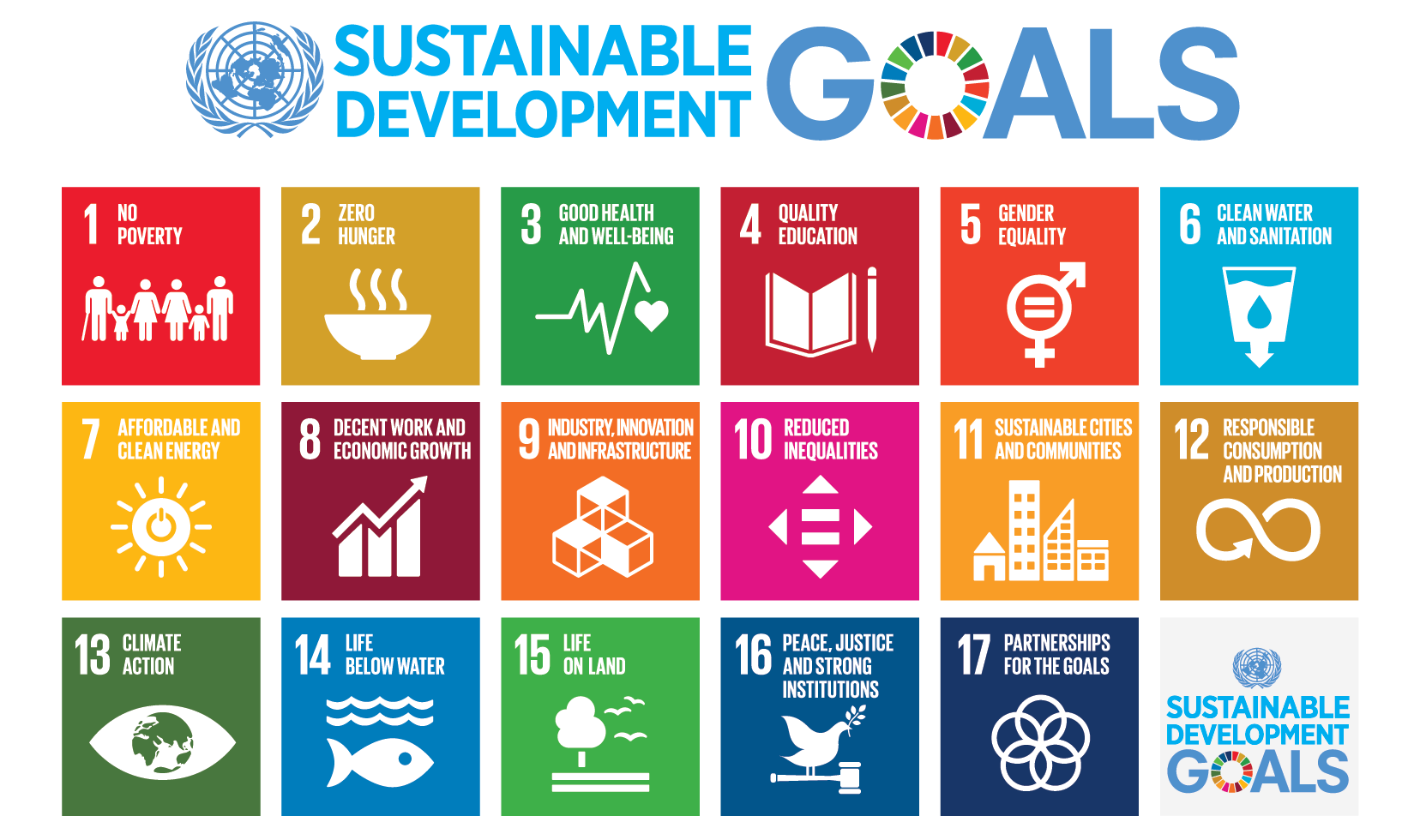
The 17 Sustainable Development Goals (SDGs) were adopted in 2015 by the member states of the United Nations.
They set a road map for the sustainable social, economic and environmental transformation of our world by 2030.
The SDGs also offer us as a company a framework for contributing to a positive future for the world. Our ESG strategy is our contribution to tackling the greatest worldwide challenges, especially to achieving the following SDGs:
We respect diversity, a fair pay and participation structure and the indivdual promotion of out team members, thus contributing to equality of opportunity.
Economic success and a profitable investment strategy are for us the foundation for securing attractive jobs in the long term and contributing to healthy economic growth.
We promote a low-emission infrastructure by locating our properties close to existing residential areas, offering our tenants access to public transport. We modernise and reposition old industrial and commercial properties to make their use lower in emissions, cleaner and more flexible, thus making a noticeable contribution to sustainable industry.
When building and repairing our properties, we are careful to use innovative and engery-efficient systems so as to aviod unnecessary environmental pressures on the surrounding area. Wherever compatible with legislation and the comfort demands of our users, we reduce technical equipment to a minimum to promote the longevity of our properties.
We align both our company and our property projects to ESG criteria. This includes planning our properties in a way that is sparing of resources and ensures them a long useful life with maximum flexibility. We also maintain open interactions in the spirit of partnership with all those involved – from planners and building firms through to the eventual user.
Reducing emissions, especially CO2 emissions, has a high priority for us within our ESG strategy. We as a company aim to reduce and compensate for our CO2 footprint to make the most effective contribution we can to protecting the climate.
In an initial workshop, we first developed core values for our company. The development of an ESG strategy for INBRIGHT is based on this: main topics were determined and validated based on a fixed evaluation scheme in a two-day workshop. On the one hand, the topics result from the requirements of national and international industry standards and frameworks, such as DGNB, LEED and GRESB, and, on the other hand, from general sustainability standards, such as the Global Reporting Initiative (GRI), the Sustainability Accounting Standards Board (SASB) and the Sustainable Development Goals. The list of topics was ultimately supplemented by specific industry requirements from the Light Industrial area. The collection of topics was classified based on a fixed evaluation scheme in a materiality assessment using a two-dimensional matrix with the dimensions “Relevance to business” and “Effects on the government and society”. The topics with the highest values in both dimensions, and hence being above the materiality threshold, form the basis of our ESG strategy or our sustainability programme. The materiality assessment is revalidated annually with the participation of internal and external stakeholders and the assessment of the topics is adjusted accordingly.
The 17 Sustainable Development Goals (SDGs) were adopted in 2015 by the member states of the United Nations.
They set a road map for the sustainable social, economic and environmental transformation of our world by 2030.
The SDGs also offer us as a company a framework for contributing to a positive future for the world. Our ESG strategy is our contribution to tackling the greatest worldwide challenges, especially to achieving the following SDGs:
We respect diversity, a fair pay and participation structure and the indivdual promotion of out team members, thus contributing to equality of opportunity.
Economic success and a profitable investment strategy are for us the foundation for securing attractive jobs in the long term and contributing to healthy economic growth.
We promote a low-emission infrastructure by locating our properties close to existing residential areas, offering our tenants access to public transport. We modernise and reposition old industrial and commercial properties to make their use lower in emissions, cleaner and more flexible, thus making a noticeable contribution to sustainable industry.
When building and repairing our properties, we are careful to use innovative and engery-efficient systems so as to aviod unnecessary environmental pressures on the surrounding area. Wherever compatible with legislation and the comfort demands of our users, we reduce technical equipment to a minimum to promote the longevity of our properties.
We align both our company and our property projects to ESG criteria. This includes planning our properties in a way that is sparing of resources and ensures them a long useful life with maximum flexibility. We also maintain open interactions in the spirit of partnership with all those involved – from planners and building firms through to the eventual user.
Reducing emissions, especially CO2 emissions, has a high priority for us within our ESG strategy. We as a company aim to reduce and compensate for our CO2 footprint to make the most effective contribution we can to protecting the climate.